
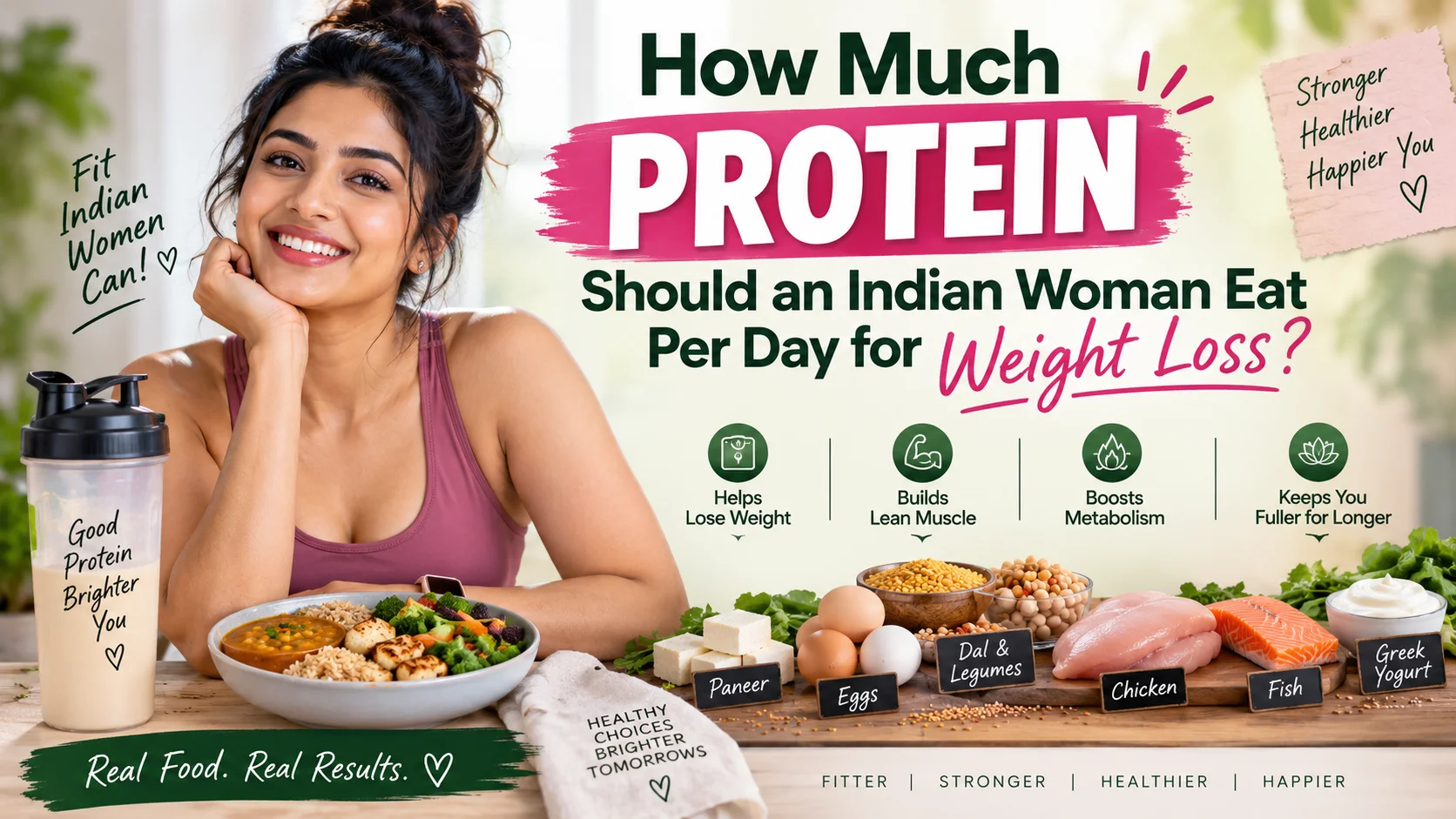
If you’re an Indian woman trying to lose weight, you’ve probably heard that protein is important, yet most advice on protein intake for women per day is either too vague or too complicated to follow with regular Indian meals.
You don’t need a bodybuilder’s diet, but you do need enough protein to stop hair fall, sugar cravings and weakness while the scale moves down. Let’s break down realistic numbers, simple meal tweaks and what actually works with dal, roti, sabzi and family cooking.
Why Protein Matters So Much For Women’s Weight Loss
Most Indian women who start dieting cut calories sharply but keep eating almost the same carbs, which leads to tiredness, mood swings and slow fat loss. Protein quietly handles three big jobs: it keeps you full, supports muscle, and steadies blood sugar.
When you eat more protein, you naturally snack less, especially on biscuits and namkeen. Your body also holds on to muscle instead of breaking it down, so your metabolism doesn’t crash while you diet, which is key for sustainable protein for women weight loss.
ICMR Protein Recommendation: What The Guidelines Say
Indian nutrition guidelines suggest that a healthy adult woman needs roughly 0.8 grams of protein per kilogram of ideal body weight for basic maintenance. That’s a starting point, not a weight loss target.
For women who are actively trying to reduce body fat or who exercise regularly, most dietitians adjust this above the basic ICMR protein recommendation so that hunger and muscle loss are under control. You don’t have to chase perfection, but you do want to move above the bare minimum if you’re in a calorie deficit.
How Much Protein Per Kg Body Weight For Women Losing Weight?
If you’re aiming for fat loss, a simple rule that works for many Indian women is 1.2–1.6 grams of protein per kilogram of ideal body weight. This is higher than the maintenance level but still realistic with Indian food.
For example, if your ideal weight is 60 kg, a practical protein per kg body weight women target for fat loss could be around 75 grams a day. You don’t need to obsess over exact numbers; staying close most days is enough for progress.
How To Turn That Number Into Real Meals
Once you have your approximate daily protein target, divide it across 3 main meals and 1–2 snacks. That way, you’re fuelling your body through the day instead of loading all the protein at dinner.
Many readers who follow the Indian vegetarian diet plan for weight loss struggle to reach their target because their plates are full of rice and roti with only a tiny portion of dal or curd. Doubling your protein portion at each meal is often the fastest fix.
Practical Protein Intake For Women Per Day With Indian Foods
Instead of chasing exotic powders, start by upgrading the food that’s already in your kitchen. Small changes in dal, curd and paneer portions can easily raise your daily protein without changing your whole lifestyle.
Here are some realistic tweaks that fit into a typical Indian routine:
- At breakfast, replace plain toast with besan chilla, moong dal chilla or 2 boiled eggs.
- In your main meals, increase dal or rajma from a small katori to a full bowl, and add curd on the side.
- Use paneer or soybean chunks in sabzi a few times a week instead of only potatoes or mixed vegetables.
- Carry roasted chana or a small box of peanuts to work instead of biscuits for evening tea.
If you’re following a structured calorie plan like a 1200 calorie Indian diet for weight loss, checking the protein in each meal is just as important as counting calories. Too little protein often explains why you still feel hungry on a “perfect” diet.
Common Protein Mistakes Indian Women Make
Many women think one small serving of dal and a spoon of curd is “high protein”, but it rarely adds up to enough for the day. Another frequent mistake is to rely heavily on fruit juices, poha and upma while trying to eat light.
Snacks are another trap, with biscuits, bhujia and baked snacks silently eating up calories without giving meaningful protein. Paying attention to at least one protein-focused snack is a simple way to protect your protein intake for women per day.
Balancing Protein With Periods, PCOS And Hormones
Many Indian women notice stronger cravings and bloating around their cycle and assume they should go easy on protein-heavy foods. In reality, keeping protein steady often makes PMS symptoms more manageable.
During your menstrual cycle, stable meals with enough protein and fibre can reduce water retention, mood swings and constant hunger, which is why dietitians often stress consistent protein during periods instead of living on sugary tea and snacks for those few days.
How To Eat Protein When You Don’t Feel Like Eating
On low appetite days during your period, focus on softer, easy-to-digest options like curd rice with extra curd, thin dal with rice, or a lassi made with unsweetened curd and a little fruit. These feel comforting but still add to your daily protein.
Warm soups made with dal, lentils or a bit of shredded chicken can also help you keep your protein steady without feeling too heavy. The goal is to avoid skipping protein entirely just because your appetite changes.
Vegetarian, Non-Vegetarian And Supplement Choices
Plenty of Indian women hit their protein targets without meat, but it does require some planning. Relying only on rice, vegetables and a little dal won’t be enough for effective protein for women weight loss in the long run.
If you eat eggs, two eggs in the morning and another at some point in the day cover a fair portion of your needs. For strict vegetarians, combining dals, pulses, milk products and soy products across the day helps cover gaps in amino acids without depending entirely on supplements.
When Do Protein Supplements Make Sense?
Some women with very busy schedules, long commutes or irregular meal times might struggle to hit their numbers using only food. In that case, a simple, good-quality protein powder can be a tool, not a magic solution.
Think of it like a convenient snack that tops up your daily intake instead of a replacement for real food. If you’re already following balanced nutrition for weight management, a scoop a day can fill small gaps, but food should still do most of the work.
How To Track And Adjust Your Protein Intake
For a week, write down what you actually eat and roughly estimate the protein in each item. It doesn’t have to be perfect; even a simple log on paper gives you a clear picture of how far you are from your target.
Once you see the gaps, fix one meal at a time. For example, make breakfast and lunch protein-strong before worrying about evening snacks, and then track how your hunger, energy and weight trend over two to three weeks.
Simple Rules To Stay Consistent
Set one non-negotiable rule like “Every main meal must have a visible protein source such as dal, curd, paneer, egg or chicken.” That single rule alone stops a lot of random snacking and poor food choices.
Over time, you’ll notice that eating enough protein makes it easier to maintain a calorie deficit, stay active and follow a regular workout plan, all without feeling punished by your diet.
Conclusion
Getting your protein intake for women per day right is less about perfection and more about hitting a reasonable range most days so fat loss feels steady instead of exhausting. For most Indian women, that means prioritising a proper protein source in every meal and avoiding “empty” snacks.
As you adjust your meals, pay attention to how your hunger, cravings and energy change over a month, and use those signals to refine your protein habits with guidance from resources like Stay Fit knowledge so your weight loss journey in India is healthier and easier to maintain.
Frequently Asked Questions
Q1. How much protein should an Indian woman eat daily for healthy weight loss?
Ans: Many nutrition experts suggest around 1.2–1.6 grams of protein per kilogram of ideal body weight for fat loss in Indian women. This is higher than basic maintenance needs and helps control hunger while protecting muscle. Start at the lower end of the range and adjust based on how your body feels.
Q2. Is the ICMR protein recommendation enough for women trying to lose weight?
Ans: The ICMR protein recommendation is designed for basic maintenance in generally healthy adults, not specifically for weight loss. When you’re in a calorie deficit, your body’s protein needs usually rise to protect muscle and manage appetite. That’s why many dietitians increase protein above the minimum for women focused on fat loss.
Q3. How can vegetarian Indian women meet protein per kg body weight targets?
Ans: Vegetarian women can reach their targets by combining several plant sources across the day instead of relying on just one. Larger portions of dal, rajma, chole, curd, paneer, soy products and nuts or seeds at snacks together add up to a solid intake, especially when planned across three meals and one or two snacks.
Q4. Does protein for women weight loss have side effects on kidneys?
Ans: In generally healthy women with no known kidney problems, a moderate increase in protein for women weight loss is usually considered safe. Problems are more likely when there’s an existing kidney condition or when extreme, unsupervised high-protein diets are followed for long periods. If you have health concerns, it’s sensible to speak with your doctor before making big changes.
Q5. How should protein intake change during periods for Indian women?
Ans: During periods, many women feel bloated and reach for sugary or salty snacks, but steady protein can actually help control cravings and energy dips. Focusing on gentle, easy-to-digest options such as curd, thin dal, paneer-based dishes and light soups keeps your protein during periods consistent without feeling heavy on the stomach.
Q6. Can I meet protein intake for women per day without using supplements?
Ans: Yes, many Indian women meet their daily needs using only home-cooked food with a little planning. Bigger servings of dal, curd, paneer, eggs or lean meat at meals, plus snacks like roasted chana or nuts, usually bring you close to your target, and supplements then become optional rather than compulsory.