
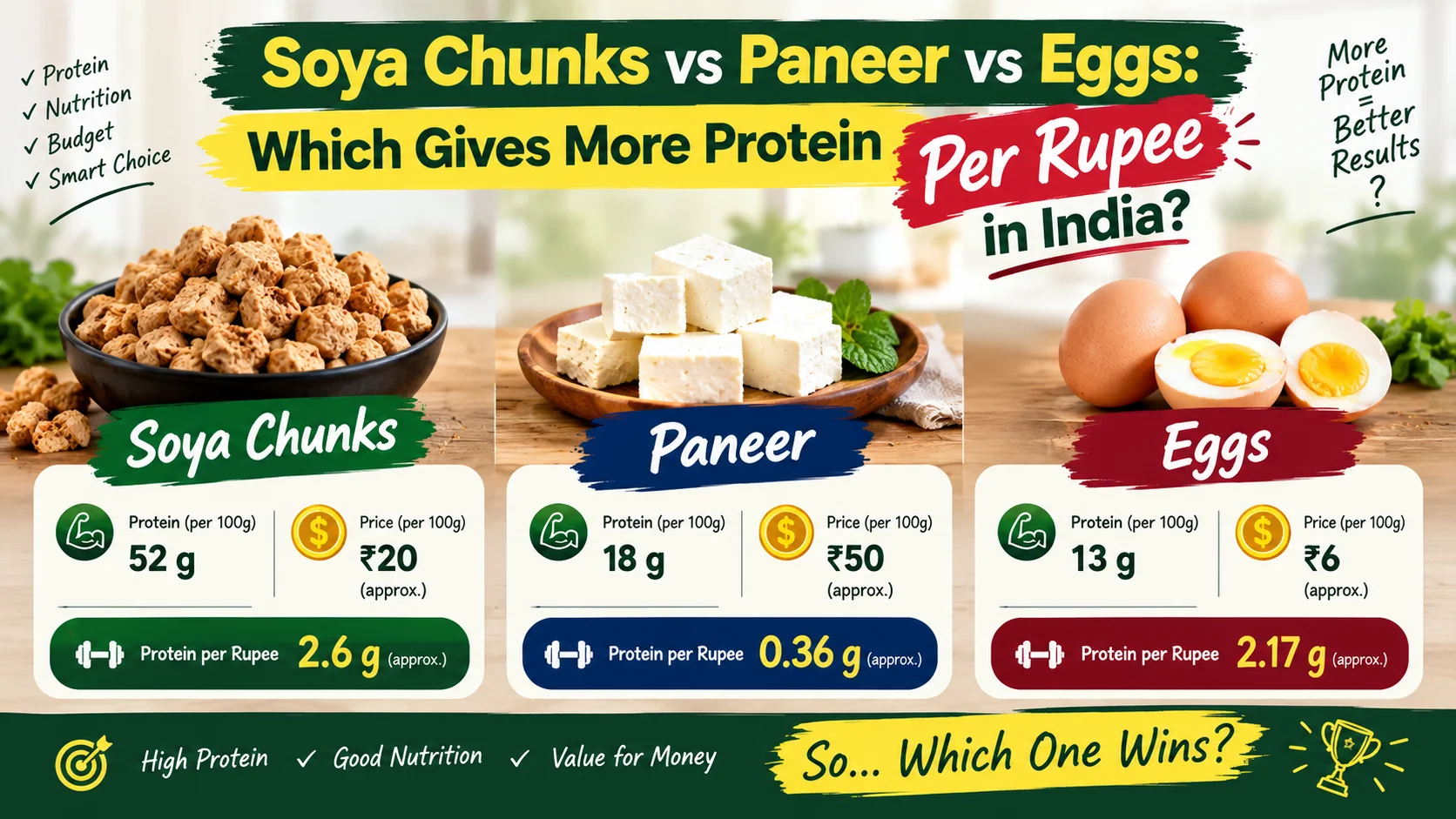
You keep hearing that protein is important, but every time you compare prices at your local kirana, you end up asking the same thing: soya chunks vs paneer protein vs eggs — which actually gives more protein per rupee in India?
If you’re trying to build muscle, lose fat, or just eat better without blowing up your monthly budget, this comparison matters more than any fancy supplement. Let’s break it down like you would on a scratch pad at home, using real-world logic instead of confusing nutrition jargon.
Why Cost Per Rupee Matters More Than Just Protein Per 100g
Most people Google soya chunks protein per 100g or paneer protein per 100g, see a number, and assume the higher one is “better”. The problem is you don’t eat 100g of everything, and you definitely don’t pay the same price per 100g for all three foods.
If you’re shopping in India on a normal family budget, the better question is: how much protein do I actually get for the money I spend? Cost per rupee helps you compare protein sources fairly, the same way you’d compare rent in different areas by cost per square foot.
How Soya Chunks, Paneer And Eggs Differ In Real Life
Soya chunks are dry, easy to store for weeks, and fit neatly into curries, pulao, bhurji-style dishes, or even cutlet mixes. Once you soak and cook them, they almost double in size, so one packet can stretch across multiple meals.
Paneer is fresh, perishable and usually a planned purchase. You might buy it from the local dairy, supermarket, or make it at home, which changes its final cost and how often you can realistically eat it.
Eggs sit somewhere in between: they store well in most Indian kitchens, work for breakfast, lunch or dinner, and don’t need soaking or marinating. For many people who track cheapest protein source india, eggs become the default because they’re familiar and quick.
So What Does A Typical Day Look Like?
Think of a regular working day in India: maybe anda bhurji with roti for breakfast, dal-chawal-sabzi at lunch, and roti-sabzi at dinner. If that’s your pattern, most of your protein is coming from dal and small bits of dairy, not from a deliberate high-protein choice.
Swapping in one high-protein, low-cost item — like a soya chunk sabzi instead of one regular vegetable dish — can quietly double your protein at that meal without changing your plate too much.
Soya Chunks: The Budget Protein Workhorse
If you’re tight on money but serious about increasing protein, soya chunks will usually win the protein-per-rupee battle. Dry storage, long shelf life, and high protein density all work in your favour.
In real use, 25–30g of dry soya chunks per person, once cooked, gives a surprisingly filling portion and a solid protein hit. You can stretch a single packet across several family meals without feeling like you’re eating “diet food”.
How To Use Soya Chunks Without Getting Bored
The biggest complaint with soya is taste and texture. Most people either don’t squeeze out the water properly or forget to add strong flavours, so the chunks feel rubbery and bland.
- Soak in hot water, then squeeze thoroughly to remove extra water.
- Marinate in curd and spices for 10–15 minutes before cooking.
- Add to mixed veg curry, pulao, or use as “keema” in rolls and sandwiches.
If you’re planning a higher-protein routine, pairing these meals with a structured plan such as the 1200 calorie Indian diet plan can make it easier to stay consistent.
Paneer: High Protein, Higher Price Tag
Paneer works well for both vegetarians and non-vegetarians and fits Indian meals beautifully, from tikkas to bhurji to simple paneer sabzi. But from a pure cost point of view, paneer rarely beats soya chunks per rupee for protein.
That doesn’t mean you should avoid it. Paneer brings calcium and fat that keep you full, especially if you’re on a calorie deficit or following a structured diet to lose weight and keep energy levels stable.
Where Paneer Makes The Most Sense
Paneer shines in two situations: when you need a filling, protein-heavy meal that still feels like “regular food”, and when you’re trying to increase your calories slightly for muscle gain. A paneer-based dinner after an intense workout can be easier on your stomach than a heavy meat curry.
For someone balancing protein and calories, pairing paneer meals with guidance like an Indian weight loss diet chart can help stop portion sizes from quietly creeping up.
Eggs: Convenience King, Middle Of The Pack On Cost
Eggs are the most flexible of the three. You can boil, scramble, fry, curry, or add them to rice and roti-based meals. They suit almost every time of day and work for students, office-goers and homemakers without any major prep.
On pure cost, they don’t usually beat soya chunks, but they often come close, which keeps egg vs paneer debates active in Indian homes trying to manage both budget and taste preferences.
Small Egg Tweaks That Raise Your Daily Protein
The easiest way to increase protein without feeling like you’re dieting is to add one or two eggs to meals you already eat. For example, have a boiled egg with your usual poha, or add egg bhurji next to your standard lunch.
If you combine this with a basic understanding of your calorie needs, as explained in guides on how to calculate calories and macros, you can nudge your nutrition in the right direction without counting every bite.
Comparing Protein Per 100g Vs Protein Per Rupee
Looking at protein per 100g helps you understand how dense each food is, but it hides how much you actually pay for that 100g. Soya and paneer might both show strong numbers on paper, yet the packet price and serving size make a bigger difference to your wallet.
Once you start thinking in terms of “protein per rupee”, you’ll notice that cheap carb foods like maida snacks, biscuits and sugary drinks quietly eat up your budget without giving you much nutrition back.
Practical Takeaway For Budget-Conscious Indians
If your goal is maximum protein for the lowest cost, soya chunks will usually come first, eggs second, and paneer third. That order can change slightly based on local prices, whether you buy branded or loose, and if you make paneer at home.
The smartest move for most Indian households is a mix: use soya chunks as your base budget protein, eggs for convenience and variety, and paneer a few times a week when you want a richer meal.
How To Build A High-Protein Plate On An Indian Budget
To actually eat more protein, theory isn’t enough. You need simple swaps that work with your current cooking style, ingredients, and time limits, not a complete kitchen overhaul.
Here’s a simple starting framework that fits into most Indian kitchens without drama.
- Pick one cheap base protein (soya chunks or eggs) for daily use.
- Add paneer or curd a few times a week for variety and taste.
- Keep dal, chana and rajma in the rotation as background protein.
- Aim to have a clear protein source in every main meal.
Over a month, that pattern will do more for your body composition than trying a complicated diet for five days and then giving up.
Simple Meal Ideas Using All Three
Try soya chunk curry with roti for lunch, egg bhurji with vegetables for breakfast, and paneer sabzi with extra salad for dinner on training days. On lighter days, keep eggs and soya chunks as the mainstay and save paneer for one or two special meals.
By repeating a few easy recipes, you avoid decision fatigue and stay closer to your plan instead of falling back to only rice and potatoes when you’re tired.
Conclusion
If you judge only by protein per 100g, the answer to soya chunks vs paneer protein vs eggs looks straightforward, but real life runs on rupees and routines, not charts. Soya chunks usually give the most protein for the money, eggs bring unbeatable convenience, and paneer adds satisfaction and variety.
Pick the mix that fits your taste, schedule and budget, then repeat it often enough that it becomes automatic, using resources like Stay Fit knowledge when you need ideas or structure. Small, consistent choices at the store and in your kitchen will matter more than any single “perfect” food.
Frequently Asked Questions
Q1. Which is cheaper for protein in India: soya chunks, paneer or eggs?
Ans: In most Indian markets, soya chunks usually give you the most protein for the lowest price, especially if you buy family-sized packs. Eggs often come second because they’re still affordable and very convenient, while paneer tends to be the most expensive source per gram of protein.
Q2. How much protein is in soya chunks per 100g compared to eggs?
Ans: Dry soya chunks typically have significantly more protein per 100g than whole eggs, because they’re a concentrated source. Once cooked, the weight of soya chunks increases, but they still stay very protein-dense compared to most everyday foods.
Q3. Is paneer protein per 100g enough for muscle gain on a vegetarian diet?
Ans: Paneer can absolutely support muscle gain if you eat enough total protein across the day and combine it with strength training. Many vegetarians in India rely on paneer as one of their main protein sources, alongside soya, dal, chana and milk products.
Q4. What is the cheapest protein source in India for students on a tight budget?
Ans: For most students, dry soya chunks and whole eggs are the most budget-friendly options that still give good protein. Buying larger packs of soya and a weekly tray of eggs can help you plan simple, repeatable meals without stretching your monthly allowance too far.
Q5. How should I balance egg vs paneer if I’m trying to lose weight?
Ans: If fat loss is your goal, eggs are great for breakfast or quick meals because they’re easy to portion and keep you full. Paneer can still fit your plan, but you may want to keep the portion moderate and build the rest of your plate with vegetables and dal so you don’t push calories too high.
Q6. Can I eat soya chunks, paneer and eggs in the same day safely?
Ans: For a generally healthy person, having all three in one day is usually fine as long as your total calories and fats fit your overall needs. Many people in India mix these foods through the week or even the same day to make their diet more flexible and less boring.