
You’ve heard creatine can help you build strength and recover faster, but as creatine for beginners you’re probably asking a different question: “How much do I take, and is this going to mess up my health?” That’s where most people get stuck, not on definitions but on dosage and side effects.
This guide keeps things simple: what creatine does, how to take it safely, what a loading phase really is, and which scary stories online you can ignore. We’ll also touch on specific worries like hair loss, kidney health, and how creatine fits into a vegetarian or mostly plant-based diet.
Why Creatine Is So Popular With Beginners
Most people don’t buy creatine to chase tiny performance gains; they buy it because they’re tired of feeling like the weakest person in the gym. Creatine helps you push a few extra reps, recover a bit faster between sets, and over time that adds up to better strength and muscle gains.
Your body already makes creatine from amino acids, and you also get some from foods like meat and fish. The problem is that typical diets don’t fully saturate your muscles with creatine, especially if you don’t eat much animal protein. That’s why creatine is one of the few supplements consistently backed by sports nutrition research.
On sites like Supplements you’ll see it recommended early for lifters because it’s usually inexpensive, simple to take, and doesn’t require complicated timing tricks to work.
Safe Creatine Dosage Per Day
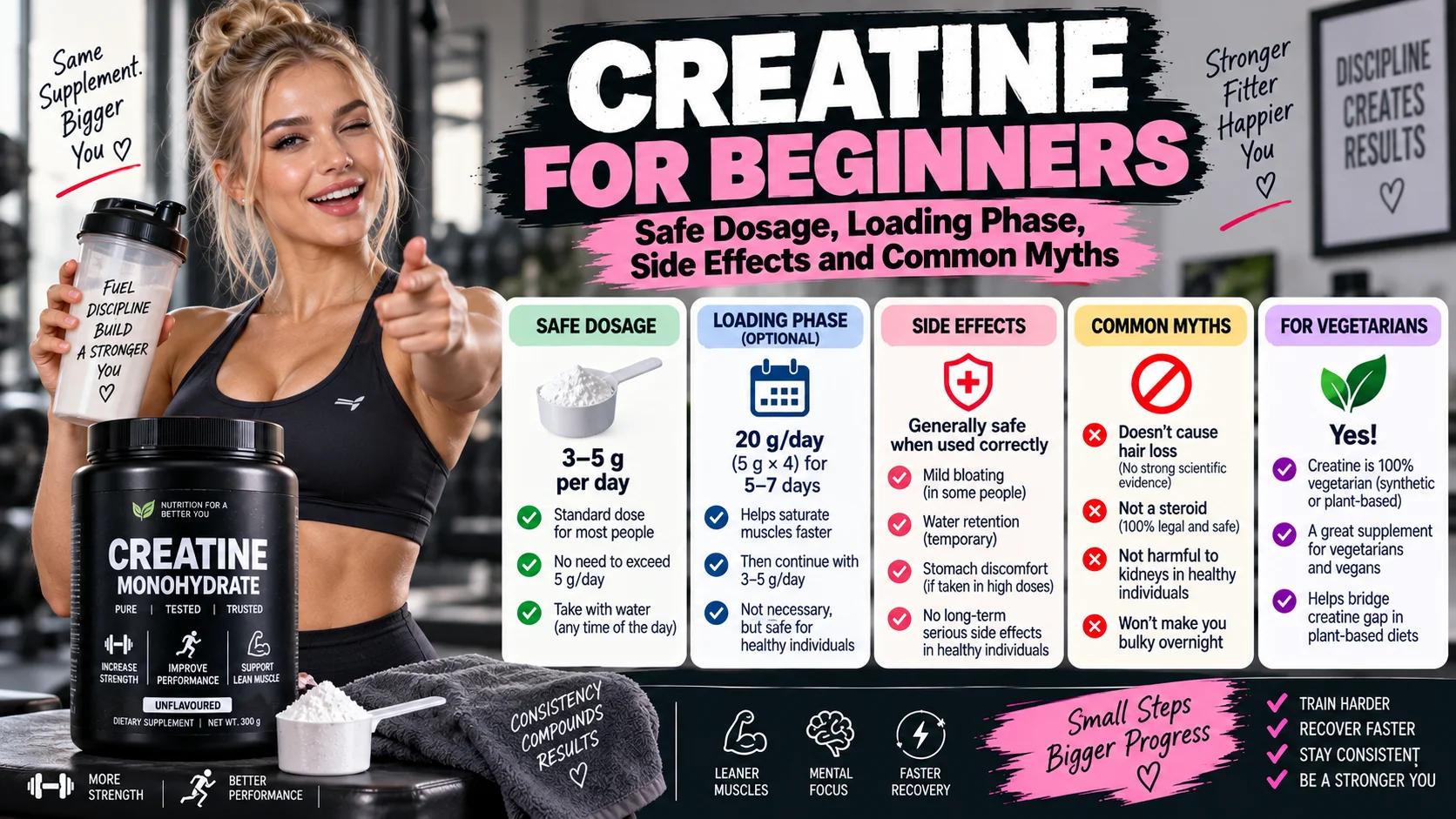
The most common question from new lifters is about creatine dosage per day. For healthy adults, the standard maintenance dose used in research is 3–5 grams of creatine monohydrate once a day. You don’t need to “cycle off” creatine in short bursts unless your doctor has told you to for another health reason.
Pick a time you rarely forget: with breakfast, after your workout, or mixed into an evening shake. Consistency matters far more than timing. If you miss a day, don’t double the next dose; just go back to your usual 3–5 grams.
Should Beginners Do A Creatine Loading Phase?
You’ll see people arguing loudly about the creatine loading phase. The classic approach is 20 grams per day, split into 4 doses, for 5–7 days, then dropping to 3–5 grams a day. That method fills your muscles faster but can be hard on your stomach if you’re sensitive.
If you’d rather avoid that, you can skip loading entirely. Just take 3–5 grams a day from the start and your muscles will gradually reach similar levels over a few weeks. For most beginners, the slower route is easier to stick with and usually brings fewer digestive issues.
Simple Loading Plan For Creatine For Beginners
If you do choose to load, keep it structured instead of random scoops whenever you remember. For example, spread 5-gram servings with breakfast, lunch, pre-workout and dinner for 5 days, then move back to a single daily dose. Drink plenty of water and watch how your body responds.
Some people feel a bit puffy or heavier during the first week because creatine pulls more water into the muscles. That early bloat is usually mild and often settles once you switch to the lower maintenance dose.
Real Creatine Side Effects (And What’s Overblown)
Most healthy lifters tolerate creatine well, but you should still understand common creatine side effects before you start. The ones that come up repeatedly are mild water retention, a bit of stomach discomfort, and very occasionally cramping when people don’t drink enough fluids.
To reduce the chances of problems, start on the lower side of the dose range, take creatine with food, and keep your daily water intake steady. If you already have kidney disease or another serious medical condition, speak to your doctor before adding any supplement, including creatine.
If you ever notice unusual swelling, pain, or digestion that’s constantly off after starting creatine, stop taking it and get checked rather than pushing through and hoping it goes away.
Does Creatine Cause Hair Loss?
One of the loudest fears online is: does creatine cause hair loss? The short answer is that there’s no strong evidence showing that creatine directly makes your hair fall out. A single small study raised concerns about changes in a hormone linked to hair loss, but it didn’t actually measure people losing hair.
What usually happens in real life is this: someone with a genetic tendency to thinning hair starts lifting, changes their diet, adds creatine and other supplements, and a year later realises their hairline has moved. Creatine takes the blame because it was new, but genetics and age explain more of the change.
If you already worry about hair thinning, keep an eye on it, take photos every few months, and discuss it with a dermatologist if you see a clear change. Don’t assume creatine is the only factor, but be honest about when you started taking it compared with when the hair changes began.
Creatine For Vegetarians And Plant-Focused Diets
Interest in creatine for vegetarians has grown as more lifters cut meat but still want strength gains. Because vegetarian and plant-focused diets contain less natural creatine, supplementing often leads to a bigger jump in muscle creatine levels compared with people who eat meat regularly.
If you’re vegetarian, focus on pairing creatine with solid protein habits: lentils, chickpeas, dairy if you eat it, or a good protein powder. Guides on topics like whey protein vs plant protein for beginners can help you decide what fits your ethics, budget and digestion.
Don’t rely on creatine alone to “fix” a low-protein diet. Think of it as a finishing touch on top of enough calories, enough protein, and a training plan that pushes progressive overload.
How Creatine Fits Into A Simple Beginner Plan
For most new lifters, a realistic plan looks like this: pick a basic full-body routine three times a week, aim for small strength increases session to session, and support that with adequate food and sleep. Creatine is a small but helpful part of that bigger system.
If you’re already following a structured gym routine like the ones under Get Fit, adding creatine is often the easiest next step after nailing your calories and macros.
Common Myths About Creatine For Beginners
Several myths refuse to die, mostly because they sound scary and get shared fast. One myth says creatine is a steroid. It isn’t. Steroids are hormones; creatine is a compound your body already makes in small amounts and that you also get from food.
Another myth says creatine “ruins your kidneys” in healthy people. Large studies on healthy athletes taking standard doses for long periods haven’t supported this, but again, if you have existing kidney issues, you need medical advice before adding extra supplements.
You’ll also hear that creatine only helps bodybuilders, not people training at home or doing short, intense workouts. In reality it tends to help with any activity that depends on short bursts of power: heavy squats, sprints, or push-up sets in a short core workout at home.
How Long Should Beginners Stay On Creatine?
There’s no strict time limit where you must stop creatine. Many people take it for months or years while lifting consistently. What matters more is whether you’re still training hard enough to benefit from the extra strength and energy.
It’s sensible to check in with yourself every few months: Are you still training at least a few times a week? Is your overall lifestyle in a good place? If your training stops for a long stretch, you can pause creatine and return to your regular dose once you’re lifting again.
Conclusion
Used sensibly, creatine for beginners is a straightforward way to support strength and muscle gains without complicating your routine. A consistent daily dose, honest tracking of side effects, and a diet that supports your training will take you further than any “magic” protocol.
As you keep building your knowledge with resources like Stay Fit knowledge and pay attention to how your own body responds, you’ll quickly work out if creatine deserves a long-term place in your routine. Start small, stay consistent, and let your training results guide your next step.
Frequently Asked Questions
Q1. How much creatine should a beginner take per day?
Ans: Most beginners do well with a creatine dosage per day of 3–5 grams of creatine monohydrate. Take it once a day at a time you’ll remember, with or without food. You don’t need mega doses to see benefits as long as you’re consistent and training regularly.
Q2. How long does it take for creatine to start working?
Ans: If you do a loading phase, you may feel stronger in your heavy sets within a week. Without loading, expect a more gradual change over two to four weeks of daily dosing. Track your main lifts and energy levels so you can see whether creatine is helping you.
Q3. What are the most common creatine side effects for beginners?
Ans: The most common creatine side effects are mild water retention, a little weight gain on the scale, and sometimes stomach discomfort if the dose is too high at once. Splitting larger doses, taking creatine with food, and drinking enough water usually keep these under control.
Q4. Does creatine cause hair loss or thinning over time?
Ans: There’s no strong research showing that creatine directly causes hair loss. If you already have a family history of thinning hair, you might watch more closely and take regular photos of your hairline. If you notice clear changes, discuss them with a medical professional.
Q5. Is creatine safe for vegetarians and people on plant-based diets?
Ans: Yes, creatine for vegetarians is generally considered safe when taken at standard doses and when overall health is good. Because vegetarian diets contain less creatine from food, supplements can be particularly useful. Just remember that you still need enough total protein and calories to support your goals.
Q6. Can I take creatine on rest days or should I only use it around workouts?
Ans: You should take creatine on rest days as well as training days so your muscles stay topped up. Timing is flexible; pick a time that fits your routine and stick with it. Creatine works through daily saturation, not by giving you a short-term spike like caffeine.