
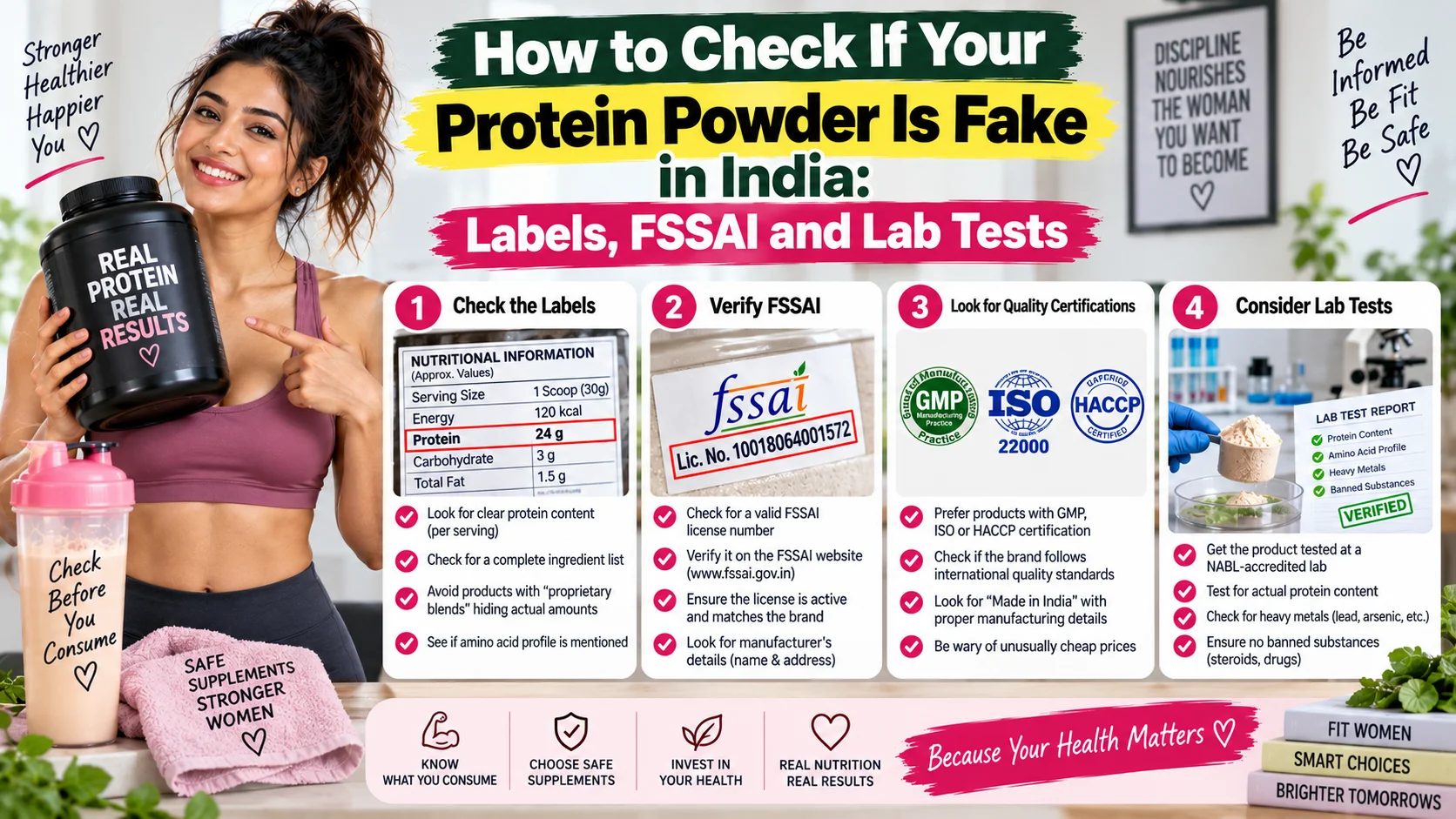
If you are searching for how to check fake protein powder, chances are something already feels off with the scoop in your shaker. Maybe the mix tastes strange, the scoop size changed, or your strength gains have stalled even though your training and diet are solid.
Fake or poor-quality supplements are a real problem in India, especially for new lifters buying from random websites or local shops. The good news is that with a few label checks, some simple home tests and basic FSSAI knowledge, you can avoid most scams before they ever hit your shaker bottle.
Why Fake Protein Powder Is So Common In India
Supplement demand has exploded in India, from college gyms to corporate offices where people carry shakers to work. Whenever a product becomes popular and expensive, you see counterfeits, refilled jars and cheap blends sold as “imported whey”.
Most fake whey is either extremely low in actual protein or mixed with cheap ingredients like sugar, maltodextrin or flour. Some shady brands use protein spiking, adding free-form amino acids so the protein number looks high on basic tests but your body doesn’t get the full benefit.
The risk isn’t just wasting money. Poor-quality powders can upset your stomach, mess with your digestion and in rare cases contain harmful contaminants. That’s why checking authenticity has to be part of your regular supplement routine in India, just like tracking your workouts.
Reading The Label: First Line Of Defence
Start your original protein powder check with the tub in your hand. Genuine products usually have consistent branding, clear information and no wild promises.
Look for these details on the label before anything else:
- Full brand and manufacturer details: Name, address and contact information, not just a flashy logo.
- Batch number and manufacturing date: These should be printed clearly, not smudged stickers you can peel off easily.
- Serving size and scoop information: A defined scoop weight and number of servings.
- Complete ingredient list: Whey concentrate, isolate or blend listed upfront, with flavours and sweeteners afterwards.
- Nutrition facts panel: Per-serve protein, carbs, fats and calories clearly mentioned.
If the protein per serving looks unrealistically high for the price point, or the panel is missing basics like carbs and fats, treat it as a warning sign. A lot of people in India skip this simple step and rely only on taste, which is exactly what scammers count on.
How To Check FSSAI License On Supplements
For products sold in India, FSSAI registration is non-negotiable. A genuine brand will display its 14-digit FSSAI number on the label, usually near the logo or nutrition panel. This is where an fssai license check supplement step becomes your best friend.
Once you find the number, check that the font is uniform and not randomly placed as a sticker. The format should match other food products you see at home. If there is no FSSAI number on a product that claims to be “made in India”, that alone is enough reason to skip it.
You can then verify the number on the official FSSAI portal or mobile app to see whether the company name and product category match what’s on your jar. Do this once for any new brand you’re trying, especially if you bought it from an unknown online seller in India.
Simple Home Checks For Fake Whey Protein
Label checks are important, but many lifters still want a fake whey protein test they can do at home. No home test replaces a proper lab report, but these quick checks can help you spot obvious fakes.
How To Check Fake Protein Powder With Water
Fill a clear glass with room-temperature water. Gently sprinkle a spoon of protein on top without stirring. Authentic whey typically forms small clumps, then slowly starts to sink and dissolve over time.
If the powder just floats on top, refuses to mix or leaves a thick, sticky layer, that can be a red flag. Very fast complete mixing with zero foaming can also be suspicious, especially when the taste is oddly sweet for “low sugar” products.
Smell, Taste And Texture Checks
Smell the dry powder first. A light milky or chocolate aroma is normal. Strong chemical smells, plastic-like odours or a completely bland smell in a “chocolate” or “mango” flavour should make you cautious.
Mix a half scoop with water. Gritty texture, odd aftertaste, heavy sweetness or a flour-like mouthfeel can all point to quality problems. Real whey isn’t magic, but it shouldn’t feel like drinking flavoured maida.
Spotting Protein Spiking And Fake Labelling
Protein spiking is a trick where manufacturers add cheap amino acids like glycine, taurine or creatine, then count them as “protein” on the label. Your scoop looks like it has high protein, but your muscles don’t get the same benefit they would from full whey.
To guard against protein spiking, read the ingredient list closely. If you see a long list of individual amino acids before or immediately after “whey protein concentrate” or “whey protein isolate”, be careful. A normal whey product might mention added enzymes or two or three amino acids, not ten.
Check the ratio too. If calories are high but protein is average, a lot of that scoop may be coming from carbs or fats instead of actual whey. This is where tracking your daily macros and how your body responds over a few weeks in India’s typical gym environment helps you spot fakes that pass basic tests.
Buying Smart: Source, Pricing And Returns
Most people get caught by fake supplements at the buying stage, not in the gym. Choosing reputable sources is as important as your training split.
Here are practical rules that lifters across India can follow:
- Prefer official brand websites, trusted marketplaces or authorised offline stores.
- Avoid “too good to be true” discounts from unknown sellers or social media ads.
- Keep bills and order confirmations so you can raise a complaint if needed.
- Check packaging quality and seal before you tear it open; film seals should be tight and logos properly printed.
If you care about your overall lifestyle, don’t rely only on protein powder. Reading broader fitness and diet guidance, like the content under Live Well, helps you build a stronger foundation so you’re not tempted by shortcuts.
Using Fitness Content To Guide Wise Choices
Experienced lifters often combine supplement use with smart training cycles, recovery and diet planning. Going through practical guides in sections like Eat Better can give you a clear picture of how protein fits into your meals, which makes it easier to judge if a powder is actually helping.
When your diet and workouts are consistent but your progress stalls after switching to a new tub, consider that a signal. Re-check the label, verify the FSSAI number again and think about whether the new seller or brand really deserves your trust.
When To Consider Lab Testing
If you train seriously and depend on supplements year-round, you might want more than home tests and visual checks. In that case, sending a sample to an accredited lab for a full protein and amino acid profile can give you clear answers.
This route makes sense if you’ve invested money into large tubs, bought in bulk with friends, or if your gym community in India is suspicious about a specific batch. While there’s a cost and some waiting involved, one lab report can protect several people from using the same fake lot.
Before you go this far, take photos of the product, label, FSSAI number and purchase bill. If the report confirms adulteration or low protein, you’ll have what you need to raise a complaint with the seller or local authorities.
Conclusion
Once you know how to check fake protein powder, spotting suspicious tubs in India becomes almost automatic. Label checks, FSSAI verification, simple home tests and smarter buying habits all work together to keep your shakes safer.
As you upgrade your training and nutrition habits with help from resources like Stay Fit knowledge, keep applying the same critical thinking to every supplement you bring home in India, and don’t hesitate to walk away from any product that doesn’t feel right.
Frequently Asked Questions
Q1. How can I identify fake whey protein at home?
Ans: Start by checking the label, FSSAI number, batch details and expiry date. Then do a simple mix test in water and pay attention to smell, taste and texture. If anything feels off, stop using the product and consider changing the seller or brand.
Q2. What is the most reliable fake whey protein test?
Ans: The most reliable test is a full lab analysis that measures actual protein content and amino acid profile. Home tricks with water and taste can help you spot obvious fakes, but only a proper report can confirm if a product really matches the nutrition claim on the label.
Q3. How do I do an original protein powder check before buying?
Ans: Before you buy, review the seller’s reputation, return policy and past customer feedback. Check that the brand shows a clear ingredient list, realistic protein per serving and a valid FSSAI number. Avoid offers with huge discounts from sources you don’t recognise.
Q4. What is protein spiking in supplements?
Ans: Protein spiking happens when manufacturers add cheap free-form amino acids to increase the measured protein content. On paper the scoop looks high in protein, but your body gets less complete protein than it should. Reading the ingredient list carefully helps you avoid products that rely on this trick.
Q5. How do I verify an FSSAI license number on a supplement?
Ans: First, locate the FSSAI number on the label, usually near the brand logo or nutrition table. Then use the official online portal or mobile app to check that the number matches the company name and product type. This simple fssai license check supplement step can filter out many risky brands.
Q6. Can fake protein powder affect my fitness progress in India?
Ans: Yes, fake or low-quality protein can slow your muscle gains and sometimes upset your digestion. If your strength, recovery or body composition stalls without any change in training or diet, consider whether your current powder might be the issue, especially if it came from an unreliable seller in India.